Gikan-Ryū
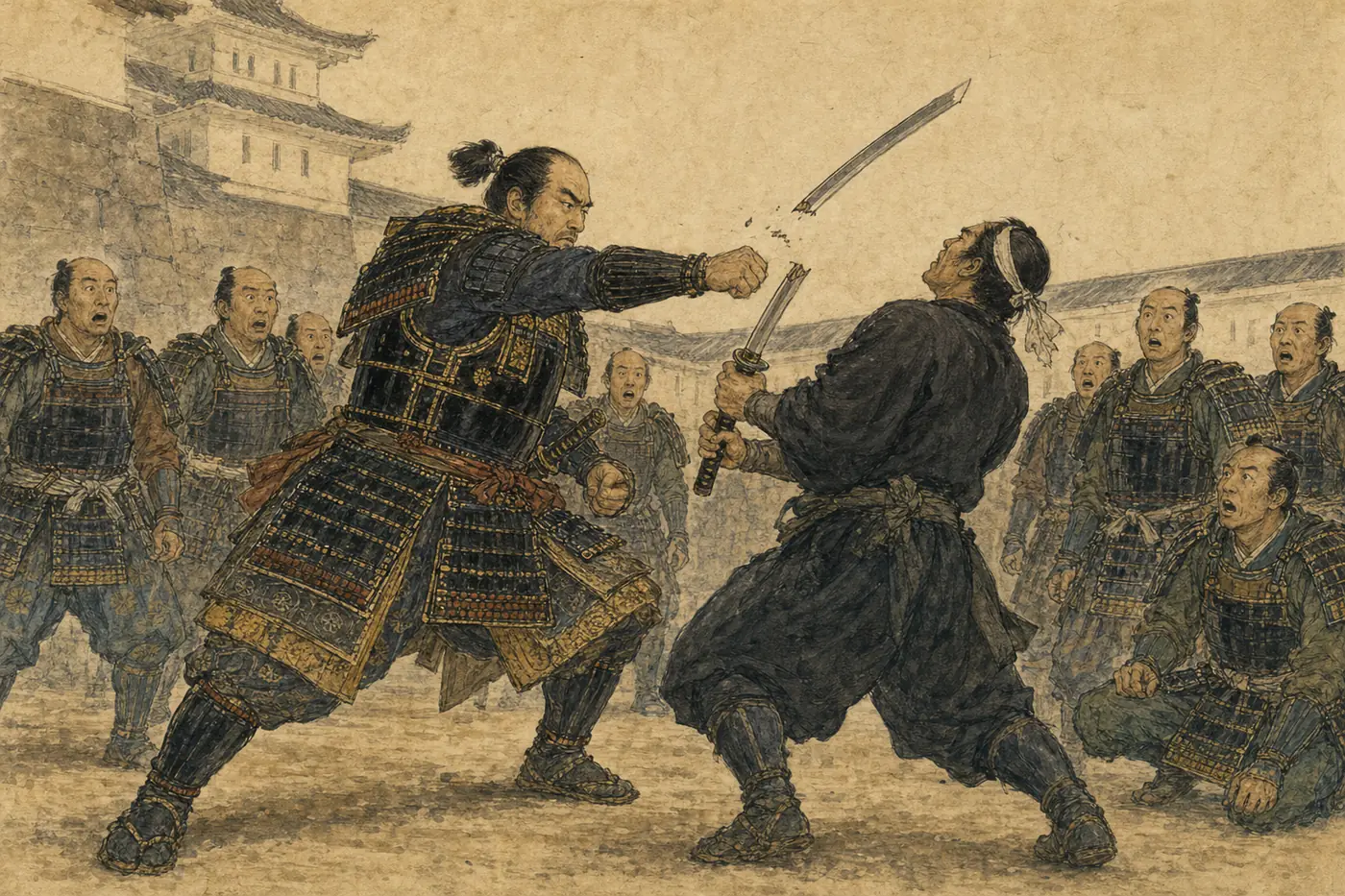
Its founder is said to have broken a sword blade with a single blow. The Gikan-Ryū has no kata, and Hatsumi has not yet taught it in public.
- Chapter
- 7, The Legacy of the Ninja
- Sections
- 2
- Reading time
- 1 min
School of Learning Justice
Uryū Hangan Gikanbo is said to have struck so hard that he once broke a sword blade in half. That is the story told about the founder of Gikan-Ryū (義鑑流) koppō jutsu 骨法術. He is said to have been daimyō of Kawachi Province (Kawachi no Kuni).
Takamatsu Toshitsugu first passed the Ryū on to Akimoto Fumio, who became its 14th sōke 宗家. But Akimoto died young of an illness in 1962 and left no heirs. The system returned to Takamatsu Sensei, who then handed it to Hatsumi Masaaki, the 15th sōke.
One teaching of the Gikan-Ryū is 「武風に先手なし」
(“The first blow does not come from this side”
). The Ryū has many special kicks, punches, and throws. According to Hatsumi, it has no step-by-step explanations of the techniques and no kata 型. That is why its methods are passed on orally.
Hatsumi has not yet taught this Ryū in public, because it is said to be very difficult to learn. The stances are very deep, and the toes almost always point in the opposite direction. That takes good balance.

Sōke of the Gikan-Ryū
- Uryū Hangan Gikanbo
- Uryū Yoshimitsu
- Uryū Yoshimori
- Uryū Yoshichika
- Uryū Yoshitaka
- Uryū Yoshihide
- Uryū Yoshimori
- Uryū Yoshiaki
- Uryū Yoshiyasu
- Uryū Gikan
- Ishitani Takeoi Masatsugu
- Ishitani Matsutaro Takakage
- Takamatsu Toshitsugu
- Akimoto Fumio
- Hatsumi Masaaki
